Monday, August 18, 2014

The Nilgiri Hills

I write this post sitting on the lawns of an old colonial hotel in Coonoor; a hill station and once outpost of the British Raj surrounded by tea plantations in Tamil Nadu.  The air is fresh and clear, the climate akin to a perfect English Summer's day, the landscape gloriously verdant and rolling, and the drink of choice is tea.  Unsurprisingly given these attributes, a trip to the Nilgiri hills has been high on my priority list for some time, and it has not disappointed me.

Relaxing with a brew while Phil is out running

The view from my table.

Shortly after uploading the photographs above, Phil returned from his run which led to an inevitable urgency to go inside for breakfast, and we're now back in Mumbai which feels like a world away from Coonoor.

It was Indian Independence Day on Friday (and a day off work) and we travelled to the Nilgiri Hills for a long weekend in a cool(er) climate.  It's a two hour flight from Mumbai to Coimbatore, where we stayed on Thursday night, before driving up into the hills on Friday morning.

A South Indian breakfast at our hotel room in Coimbatore, Tamil Nadu, to get us into the southern vibe

The biggest hill station in the Nilgiris is Ooty, which sits 8000ft above sea level and is famous for the narrow gauge steam train which meanders from the base of the hill up to the town.  We decided not to stay in Ooty itself on the basis that Coonoor looked quieter and less spoiled by mass tourism, but went to have a look on Friday with the plan to catch the 2pm steam train back down the mountain from Ooty to Coonoor.  Unfortunately, the waiting list for the train didn't go down quite fast enough so we missed out on this journey, a good reason to return in future!

In Ooty, we visited a tea factory and tea museum, which was full of tourists ignoring the interesting exhibits and buying lots of tea.  I loved watching the tea making process; from the collection and drying of the leafs, then the CTC (Crush, Turn & Curl) process, followed by some spinning, heating, general oxidising and, finally, packaging and drinking.  The process in itself is very simple and fairly old fashioned - I've learned a lot about tea over the weekend.

Huge trays of tea leaves,handpicked and currently being dried by fans underneath the trays 

The CTC machinery

We drove up to Doddabetta Peak, the highest peak in the Nilgiris, though underestimated the extreme nature of the traffic on Independence Day in an area with narrow roads and a large number of buses and oversized tourist vehicles.  We couldn't see much from the peak but it was all very jolly with families enjoying a trip out to celebrate the holiday.  After a visit to the Rose Garden, Lake (artificial) and a super-size biryani lunch, our driver hurtled back down the winding roads to drop us at our hotel in Coonoor.

One of the thousands of roses in the pretty garden, with an amazing range of names that I had no idea had been given to roses! 

This highlights the importance of careful thought when selecting a bunch of roses as a gift; the recipient could have read this sign.

The "Jennifer" rose. Sadly we couldn't find a Philip rose although wikipedia tells me that a "Philippe" rose exists, and that's close enough for me.

Coonoor is the second largest hill station in The Nilgiris and is famous for its tea plantations.  We stayed in a hotel which used to be a vicarage; and now sits next to the quaint church in a picturesque corner of Coonoor.  The hotel is the first time I have been in India and could have easily believed that I was in an English country garden in summer.  The hotel's history in itself is interesting; it was converted into a club / hotel in the late 19th century although Indians were not admitted unless they were royalty or similarly esteemed, a worryingly familiar story which doesn't give me great pride in my country...

Our hotel in Coonoor in the heart of India

We were expecting a wet and misty weekend in the monsoon but discovered that Ooty and Coonoor, despite being only 20km apart, have different weather patterns and only Ooty gets the early monsoon.  Coonoor will be dry(ish) until October.

We spent Saturday exploring the Coonoor area including Sims Park, a beautifully kept botanical garden in the town.  We went for a long walk visiting a tea plantation, local village, temple complete with impish children and a popular view point called Lambs Rock.  Our walk was around 20km in total and very peaceful until the last few kilometres when we hit the wall of traffic stuck on the narrow road between Coonoor and Lambs Rock which was clearly not wide enough for large tourist vehicles on both sides of the road.  We strolled past the gridlocked traffic, much to the amusement of the car passengers who found it unfathomable that anyone could have walked to the view point.  On this occasion, walking was a lot quicker than travelling there and back by car!  We were back at the hotel in good time to catch the first session of the cricket, not a popular topic of conversation in India at the moment...

Beautiful 

Part of Sims Park although it's really much nicer and more impressive than this photo suggests 

Highfield Tea Factory, where we had another factory tour 

More hills - we couldn't get enough of them 

We stumbled across a group of children playing with tyres and sticks near a temple.  They were very friendly and taken with Philip as he gave them a tutorial on Google Maps on his tablet. 

The ladies of the family came out and kindly fed us sweet tea and bread for lunch!  This girl, Gayatri, is around 17 and was charming, with good English.  She wants to study maths. 

Tea pickers 

Looking out over Lambs Rock 

 A group of boys were playing cricket outside a children's home and invited us in to bat and bowl.  Phil is showing off his silky bowling skills above...

..and I did a respectable job batting below

My legs were pretty achey by the end of the day as Phil and I went for an early morning run, not usually a successful joint activity as we have different ambient speeds...Phil is convinced that I'm not trying when I'm running at a speed comfortable for me so I always end up going too fast and getting tired out which happened again here, not helped by running up a massive hill at the start of the route!  On Sunday morning, I elected to read my book with a cup of tea in the sunshine instead.

Having a short break to admire the view

On Sunday, we visited a tea plantation called Tranquilitea which produces gourmet tea and runs tea tasting sessions. We were originally told that these sessions were fully booked for the weekend, but I kept calling and the owner kindly fitted us in on Sunday.  This was amazing.  The plantation is perched on top of the highest peak in Coonoor and is very peaceful.  We had a thorough and fascinating tea tutorial and enjoyed tasting a range of the teas produced by the plantation.  I cannot recommend this experience highly enough.  Anyone interested in tea should stay at Tranquilitea if possible and try to book the tea tasting session in advance if not.
 
Loving my tea at Tranquilitea

The teas lined up ready to taste.  We were tutored in the difference between flavour and body; and I now know my Silver Tips from my Pekoe, Green and Oolong. 

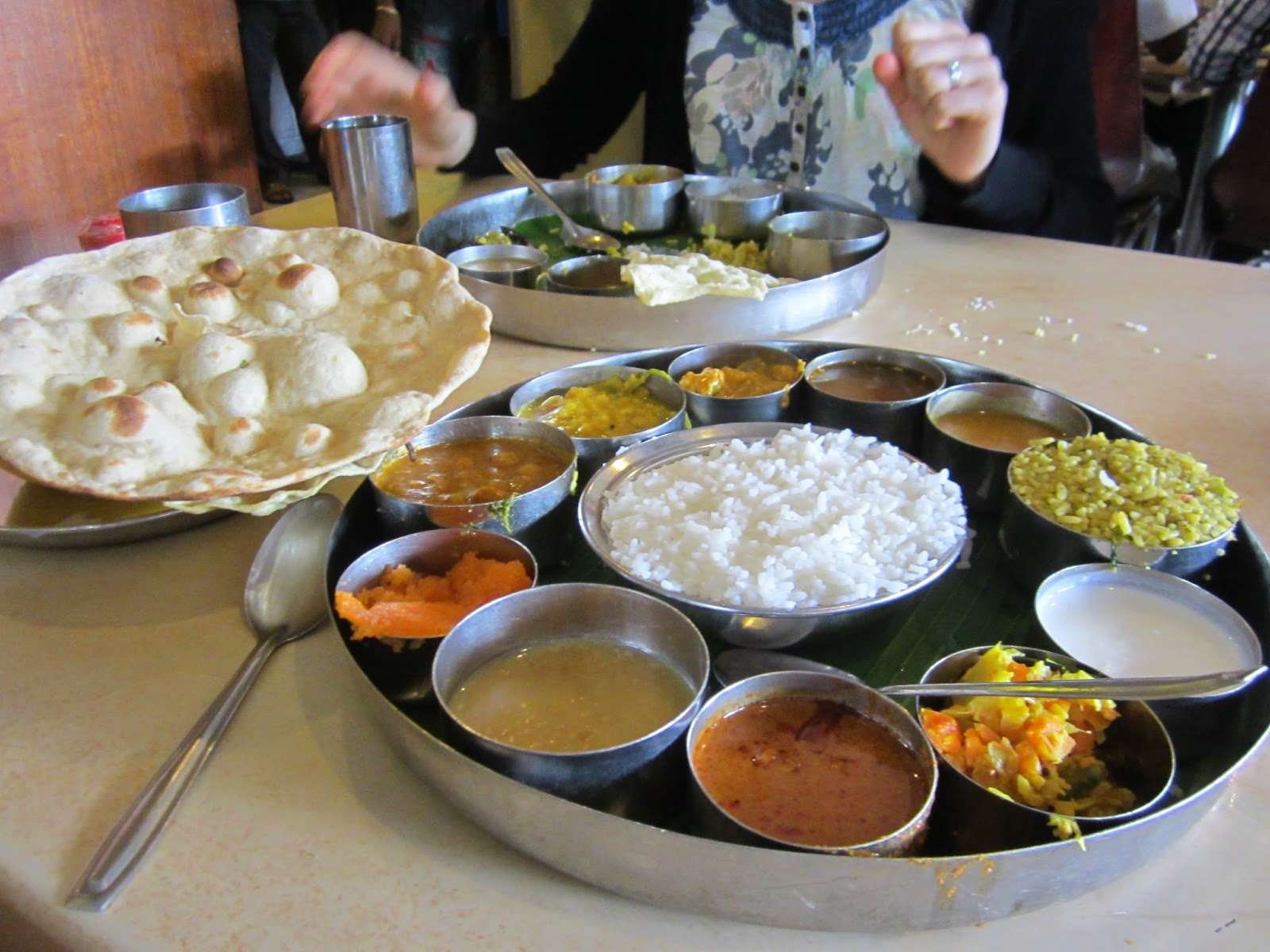
Afterwards, we explored Lower Coonoor which is more like a typical Indian town; not the cleanest but full of life and quirky things to see.  Phil needed fuel after a long morning run and a 100 rupee (less than £1) thali at a local pure veg restaurant did the trick.

Lower Coonoor - Bustling and more typically Indian than the hills

Phil's monster lunch.  I had the mini thali which I think was a children's meal as it was all non-spicy and rice based, which suited me fine.

Monday, August 4, 2014

Philip's birthday weekend in Gujarat

On Sunday, Philip had his 32nd birthday, or he is now 33 years running as we say here in India. Suddenly, time seems to be moving rather quickly. It's 10 years since I left school and spent the summer holidaying and bell ringing in Australia, 5 years since we bought our house in Cambridge and almost 3 years since we got married. Time marches on...

Anyway, we celebrated with a weekend away in Gujarat, the state directly north of Maharashtra, with an itinerary some way from the main tourist trail.  Gujarat is famous for several things; Mahatma Gandhi, the current Prime Minister Narendra Modi ("NaMo"), the best roads in India (thanks to NaMo), a prosperous business culture, salt flats (Gandhi again) and being a "dry" state.  To get a beer in Gujarat, one needs to register for an alcohol licence and this beer can then only be drunk in private.  Phil's birthday was going to be a sober one.

We started our journey on Friday evening on an overnight train from Bandra station, a mile or two from home, up to Mahesana, one stop north of Ahmedabad, the capital of Gujarat.  The journey didn't start well as every taxi and autorickshaw we approached refused to take us the two miles to the station, probably on account of the traffic and difficulty getting back into Bandra again, so we were left to march through the crazy Friday night traffic to our destination.  Thankfully we'd left lots of time and were soon on our upper bunks in AC 2-tier, a comparative luxury relative to our more recent sleeper class train experiences, and enjoyed a decent seven hour sleep before our arrival in Gujarat at 7am the next morning.

Shortly before our stop, when we were waiting by the doors, the cleaning boys came round to sweep up the carriages and empty the bins.  I was a little horrified, though not surprised, when everything was swept into a pile and I was politely asked to stand aside so he could open the train door (whilst in motion) to sweep the whole lot outside.  Sigh.  It seems that my efforts to put things in the bin rather than on the floor were in vain; it doesn't make any difference.  I do feel sorry for those living by the train tracks.  Life is hard enough as it is without train loads of litter being swept on you each day.

Sweeping up

We were picked up by our driver at the station, a young chap who didn't know any English and didn't know where he was going, but appeared to be able to drive a car safely so all was well.  Google maps is our friend in India; getting around would be a lot more difficult without it.  We had arranged the car in advance and Phil had a planned our route, started with the Rani ki Vav, an ancient stepwell in Patan, an hour's drive from Mahesana.

Now a day driving round rural Gujarat to visit stepwells doesn't sound particularly thrilling, but stepwells are a little known gem of northern India.  Where rain is sparse, it is very important to conserve what you can when the rains come, therefore many deep wells were built by wealthy rulers.  These are not, though, my kind of well consisting of a hole in the ground and a bucket; these are serious pieces of architecture.  From what I've seen, it seems that building a flashy stepwell was the 10th century rich Indian equivalent of driving a sparkling new BMW as quickly as possible in the streets near our apartment in Mumbai.  It was something to show off about.

The Rani ki Vav is a UNESCO World Heritage Site and is magnificent.  It was buried until the 1960s so is now beautifully preserved with incredibly ornate stone carvings.  The highlight of my trip was when we reached the top of the stepwell and looked down on a colourful mass of schoolgirls who behaved like they have never seen a white person before (which was probably the case).  They came running towards us, desperate for photographs and to shake our hands, with no embarrassment or inhibition.  The only slight difficulty we had was paying for our tickets to get in as our driver was incredulous that we were being charged 100 rupees (£1) for a ticket and couldn't understand why we weren't being given the 5 rupee rate.  I have long ago learnt that there is no point even trying to get the lower rate, resident or not.

Our lively friends at the stepwell

The astonishing Rani ki Vav 

The stepwell is covered with these carvings, immaculately preserved

From the stepwell, we moved on to Modhera, the site of a Sun Temple, the twin to the temple that we saw in Konark in February this year.  We hired a very enthusiastic guide who talked us through the carvings and structure of the temple.  The lessons that will stay with me are "never enter from the south" (not a good idea, apparently) and that 108 and 1008 are both lucky numbers.  There is a huge stepwell (a theme emerges...) with 108 mini-temples along with the main Sun Temple and entrance hall.  The temple itself used to contain an idol with a diamond embedded such that the sun would shine through the diamond at the Equinox and light up the whole temple.  Unfortunately, the statue and diamond are long gone, to be replaced with lots of smelly bats, but it's a good story.

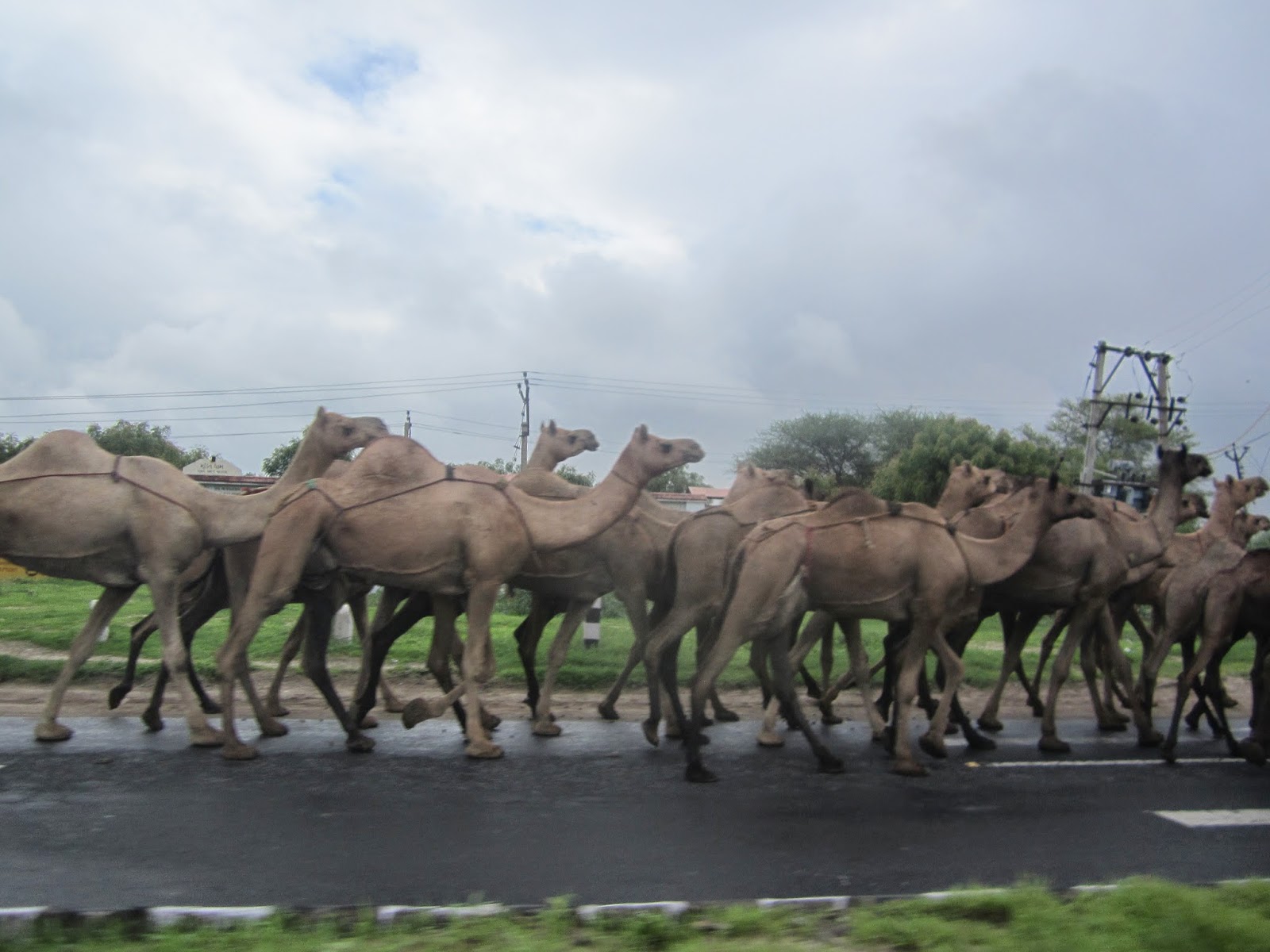
 A herd of camels on the road

The 108 temple stepwell in front of the Sun Temple 

Note the woman giving birth in these carvings on the temple

Carvings on the temple - used for sex education lessons 

 Bats in the temple. Bats are very smelly.  I am not a fan.

The south exit from the temple - not to be used for entry

We had a sneaky roadside breakfast of deep fried spice lentil dumplings (veg, deep fried, very hot, never going to kill you) which our driver tried to supplement by offering us grubby fruits.  The intention was good, but I politely declined.

Our journey into Ahmedabad was quick owing to the excellent roads (tarmaced, no potholes, infrequent wildlife) though with the added excitement of deep flooding in places, though this didn't seem to bother our driver.  We made it through unscathed to our next stepwell stop; the Adalaj stepwell outside Ahmedabad.  This was fairly busy and, after a quick scamper down and up the steps, we were ready for our lunch.

Water-logged road.  The plastic barriers provided some guidance as to where the road ended and the river started. 

The Adalaj stepwell

Our driver took us to a Gujarati thali restaurant; a gut busting experience and possibly my favourite type of Indian cuisine.  Gujarati food is lighter and sweeter than north Indian food (close to the UK curry house style) and, to me, is simply delicious.  The flavours are intense without being dominated by chilli and the range of dishes is incredible.  It's all pure veg (no meat or eggs) but lacks nothing as a truly satisfying meal.  At some point, I will do a separate blog post dedicated to the Gujarati thali - it deserves it.

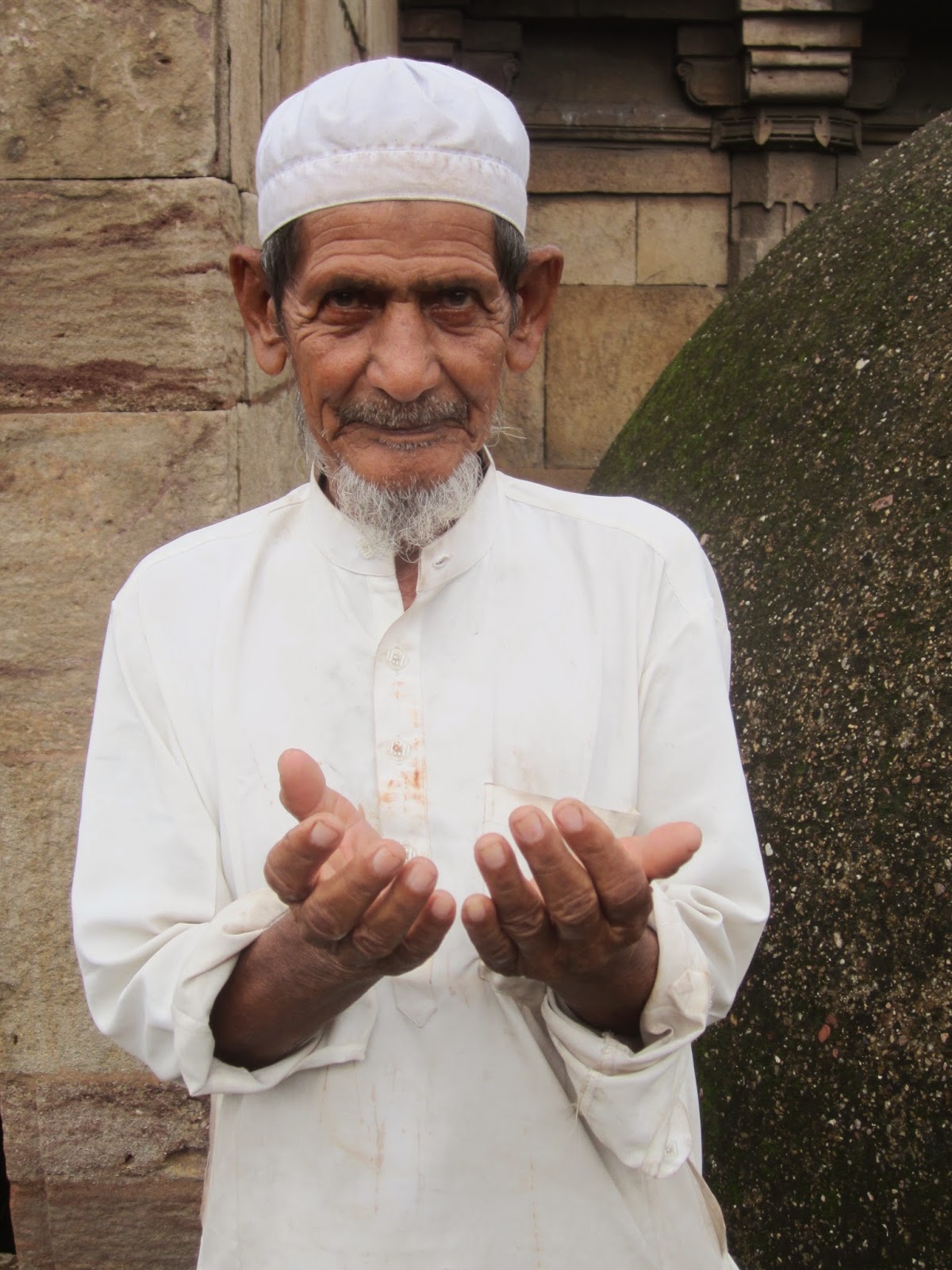
Full to the brim, we had some mid-afternoon mosque tourism at Sarkhej Roza, a complex of buildings on the outskirts of Ahmedabad.  This was rather cheery and I spoke with (smiled, said hello, how are you, ran out of conversation) several locals who were all friendly and welcoming.  I have found some mosques a little forbidding as a woman, but not here.

The mosque complex 

A boy with a mouth powered horn on his bicycle

Our accommodation was in the heart of the old city of Ahmedbad, in a beautifully renovated old bungalow run by the Neemrana hotel group.  This was really lovely; the aim of Neemrana is to keep as many original features of the old buildings as possible and the hotel achieved this goal.  We enjoyed a peaceful meal in the hotel that evening and were more than ready for sleep after a busy day.  We left the hotel with a copy of the Neemrana catalogue and lots of ideas for future trips in India!

Divan's Bungalow

On Sunday, Phil started his day with a long run along a track next to the river in Ahmedabad (crazy) and received his gifts (mainly running book and travel guide themes) before breakfast.  Fueled up, our day of exploring began with us walking round the old city to visit several old mosques and havelis (beautiful houses in a decrepit state) and soaking up the atmosphere.  Soaking up the atmosphere in an Indian city in the monsoon can be a more sensory experience than is ideal, but we got a feel for this industrious city (the old "Manchester of the East") and enjoyed its vibrancy and energy.

The cow and the milk 

 An example of the buildings in the old city

The Jama Masjid 

Inside the Jama Masjid

By one o'clock we were muddy, hungry and ready to sit down for Phil's birthday lunch (more thali!) at a recommend restaurant on the rooftop of a restored haveli (House of MG) in the heart of the city.  The food was excellent, although the rose and coconut icecream for dessert appeared to contain lumps of ghee which was a bit offputting, and we retained our equilibrium.

Birthday lunch

We hired an autorickshaw for the afternoon with a very cheerful driver to see another stepwell, a textiles museum in an impressive palace (no photos allowed sadly), a lake where the locals enjoy a Sunday afternoon walk, and Phil's birthday icecream at a nearby cafe (in lieu of cake).

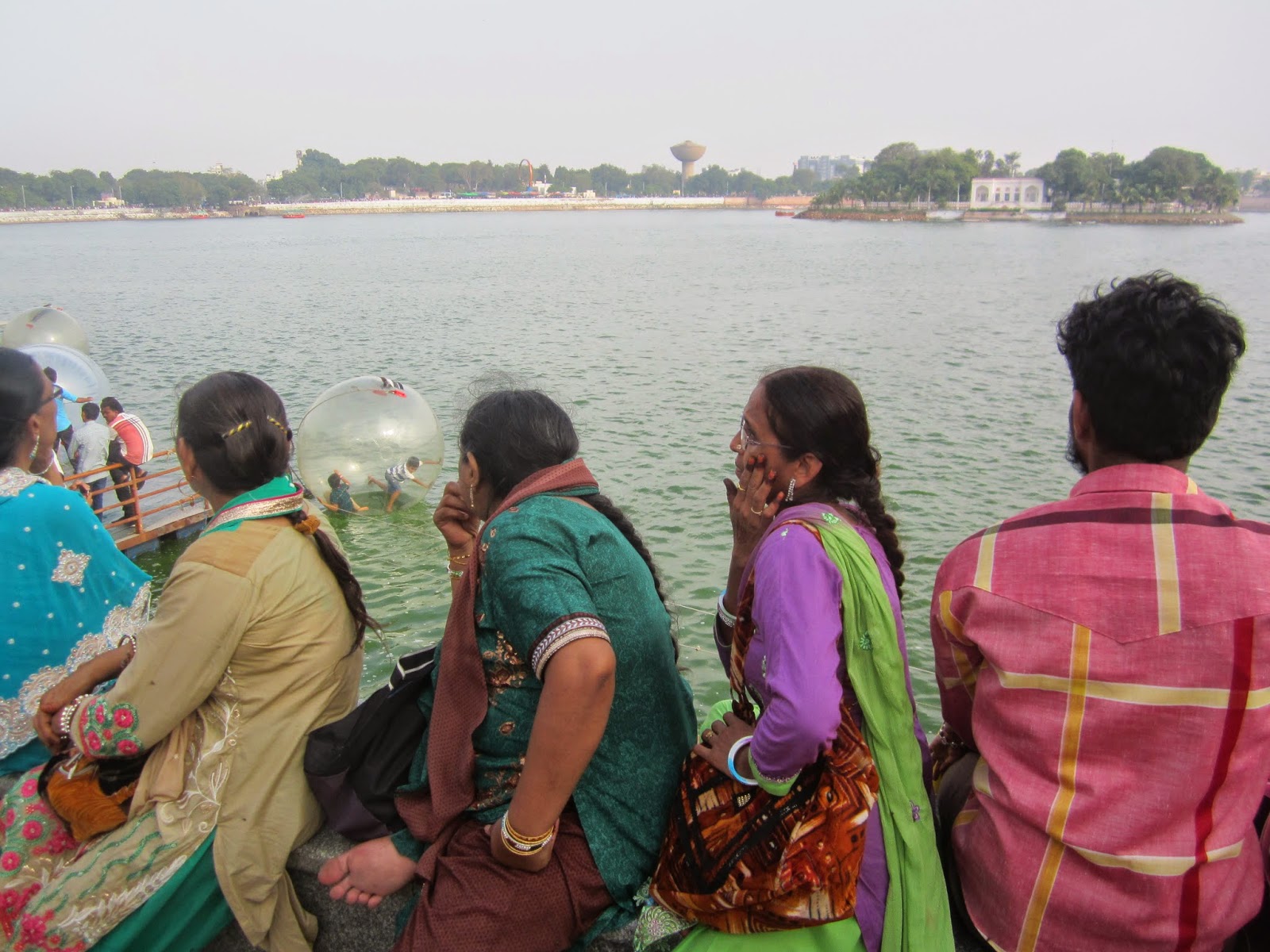
The lake 

Phil's guide around one of mosques.  He was a friendly chap. 

Stepwell from a new angle 

Another hidden mosque that we stumbled across

Ahmedabad is full of treasures but you have to look through a lot of dirt and dilapidation to appreciate much of what it has to offer.  I thoroughly enjoyed our visit and would love to see many of the old houses returned to their former glory.  Our hotel demonstrated what can be achieved through conservation, but this requires money, which is needed for so much in India.  There aren't, however, many places in the world where would can walk out of you hotel to see a real life working elephant, and that's special.

Outside our hotel

Classical music - Indian style

On the wettest day of the wettest July in Mumbai for 50 years, Phil and I had booked tickets for an Indian classical music concert in Bandra, our first taste this genre of entertainment since arriving in India.

This seemed like bad planning at the time as the relentless rain flooded roads and generally left carnage in its wake, but the concert was a short walk from home so we pulled on our waterproofs (largely ineffective in the heaviest rain) and braved the elements. Naively, we had thought that the concert might be cancelled but we had forgotten that Bombay does not stop for the monsoon. When we arrived at the rather smart and modern venue, the reception hall was already a lively mix of the seasoned concert goers of Bombay (kitted out in their finery) and the young and trendy (we were neither of these, and the only foreigners to be seen) looking forward to some entertainment.

The music was performed by a group of musicians called "Classicool" although they were very firm that  "they are not a band but a concept".  The group included a drummer, tabla player (drums a bit like bongos), sitar player (Indian guitar, think The Beatles), flortist, violinist, bass guitarist and vocalist and the set included shortish pieces, each less than 10 minutes, involving some or all the instruments.

The aim of Classicool is to introduce Indian classical music to new listeners in an accessible way, in short, snappy pieces in a jazzy style on amped up instruments. The result was really good fun and the musicians were very talented; I would not have believed that a 10 minute tabla solo could be so enthralling before this performance. It did all sound a little similar to me, but I don't think my ear is yet attuned to the subtleties of the music. This might improve over time.

There were several notable differences to a western classical music concert. 

First, the start time. The ticket said 1930, although the doors weren't even open then. It was gone 2000 by the time the music began. We did though have a slides how of real estate adverts from one of the sponsors to keep us amused...

Second was the interval which was a classic. The leader of the group (sitar player) gave an informative description of the background to Classicool, followed by thanking what felt like everyone in the audience apart from us for their contribution to Classicool / Indian classical music / life in general. This was followed by inviting several particularly revered musicians up the stage when lots of feet touching ensued (for respect) and the exchange of various gift hampers completed the thanking process. This lasted ages, but offering thanks and not offending anyone must have been a necessary part of the proceedings.

Finally the coming and going of audience members was free flowing, though it was loud and dark so it didn't matter very much. It was all good fun.


Waiting for the show to start

The Classicool line-up

Lots of chat in the interval

All in all, I would definitely go again, though maybe not to a full length Indian classical music performance which go on for an age. Classicool was great and can be found on YouTube for those who would like a look (Mum, you'll love it; Dad, you won't, but you may become familiar with it if Mum uses it in her music lessons in the future:-))

Sunday, August 3, 2014

Attitudes to women in India - An insight from the GoAir in-flightmagazine

I could write a thesis on attitudes to women in India, but I won't on the basis that it's rather more lighthearted to write about our travel, and it's difficult to know where to start on this topic.

I do though want to share a couple of snippets from the GoAir complimentary in-flight magazine, provided for my entertainment for our flight from Ahmedabad to Mumbai, on which I am writing this blog entry.

GoAir (one of India's several budget airlines of which I am a frequent customer), seems to have shunned the conservatism prevalent in India in favour of material which I assume it believes will cater to the modern Indian woman (and man).  Articles include "11 reasons to worship your body (and his)", with each reason conveniently aligned with a specific body part, "The Oomph factor", featuring lots of scantily clad footballers' wives in bikinis and "vows and visuals"' for the discerning bride to be struggling to find a suitable wedding photographer.

I won't share any more of these gems, but instead with a couple of letters from readers and an advert, both written without a trace of irony.


I assume that K Gandhi and W Sharma are Misters but, even if not, I'm pleased to hear that they enjoyed the inflight entertainment.


If there are any housewives out there revelling in this new opportunity to enter a beauty pageant then please do let me know.

One of my favourite in-flight magazine items is from the IndiGo magazine (excellent airline, great branding), advertising for cabin crew applicants who are "female, aged between 18 and 25, at least 5 foot 6 inches with weight in proportion to height and a clear complexion". Again, this is deadly serious, but you have to laugh about it.

Thursday, July 24, 2014

A very Indian car accident

This week, Monday morning was a little more eventful than I had anticipated.  It was all going so well, we'd had a relaxing weekend and I'd enjoyed a successful run on the treadmill and was feeling ready for the working week ahead.

Unfortunately, we had a mishap whilst queuing at the traffic lights on my journey to the office.  Sagar and I were having a peaceful chat when there was a loud bang on the roof of the car.  Unaware of the cause, we then saw that the windscreen was covered in cracks (we were lucky it hadn't shattered) and were realised that we were the victim of a tearaway coconut!  Our suspicions were confirmed when the driver of the car behind us got out and nabbed the coconut.  We didn't even get to keep it for our trouble.

We completed the journey to work and Sagar took the car down to the local garage.  Another positive aspect of living in India is that a new windscreen and getting this fitted costs a grand total of £55, or less if your insurance covers it.  So it was a bit annoying, but could have been much worse.

Apparently, it's quite rare for coconuts to drop from trees onto things / people so we were unlucky in that respect, but also very fortunate that it hit the roof a few inches behind the windscreen rather than smashing through the windscreen itself.  We now have a shiny new windscreen and a dent in the roof which will stay there for a while.  Our car now blends in with the other dented cars in Mumbai at least. 

Sagar was keen to fix the dent through home-spun methods (trying to bash it out from the inside of the car...) but this doesn't seem to have worked so far.  We'll keep the dent for the moment as a reminder of our close call with a coconut.

Post-accident with dent and cracks.  The red cloth on the dashboard is Sagar's lucky Ganesh 

 Sagar on the case

Dent remaining after the new windscreen had been fitted.  The 46 is the number for Sagar's favourite motorbike driver - Valentino Rossi

Cracked windscreen 

Back to normal (almost)

It was Sagar's birthday this week too, although there was some confusion regarding the exact date (22nd or 24th), a very common problem in India as birth dates on official documents are often incorrect.  Sagar's driving licence says the 22nd, but he knew that he was born on a Friday, so by tracking back 22 years and consulting with his mother we worked out that he was born on the 24th after all.

We bought him a new shirt as a present which seemed to go down well as Sagar wore it for the day.

Modelling the new shirt - Sagar was happier with this than he looks!

Thursday, July 17, 2014

Haleem

We are back in India!  My blogging hiatus is over as I returned to Mumbai from the UK last week and Phil arrived home at the weekend.  After a period of almost six weeks apart in different countries, it's excellent to be back at home and together again.

It's all change here though as Phil is no longer working in India and is currently adapting to his (very early) retirement.  Further, the monsoon is now in full flow which is atmospheric but extremely wet.  In only 24 hours this week, we had rainfall equal to 50% of the total rainfall in the UK last winter (a supposedly wet one).  This makes it a little harder to get around, but the drop in temperature to a bearable level relative to May more than makes up for it.

Last night, we had a mini culinary adventure at the Good Luck restaurant, a small Irani cafe featured in my treasured Savour Mumbai cookbook.  We are currently in Ramadan (a period in which Muslims fast during daylight) and wanted to find and try a dish called haleem; a thick, meaty stew made in this period.  Hyderabadi haleem is famous but we narrowly missed trying it last year by visiting Hyderabad shortly after Ramadan (called Ramzan here).  We were determined not to miss it again, so arrived at Good Luck at sunset to claim our table and place our order.

We supplemented the haleem with kheema beef (lightly spiced mince, meat source unknown though probably goat) and mopped it all up with sweet maska buns (soft white bread baked with mixed fruit peel). 

 Left to right; Haleem, maska buns and kheema

Haleem.  I'm not sure what the crunchy bits on top were but they tasted good and I'm not sick....yet

The meat was washed down with hot, sweet tea served in a good luck cup

 Enjoying my tea (despite the facial expression)

We usually eat vegetarian food in India but this meaty foray was a welcome and worthwhile exception.  Both the haleem and kheema was warming, yummy and perfect for a wet evening.

Now that we are back and settled in India for the foreseeable, further trips and holidays are firmly back on the agenda.